
Why Fractional Leadership Breaks Without Systems
Fractional leadership looks flexible from the outside, but in practice it creates a constant juggling act. You are moving between leadership roles, company cultures, priorities, and communication styles, often in the same day.
The real challenge is not workload. It is context switching at a senior level while still delivering consistent strategic outcomes.
Most burnout in fractional work does not come from doing too much. It comes from lack of structure across clients, unclear boundaries on time, and fragmented execution systems.
The solution is not working less. It is building a leadership operating system that keeps you focused, visible, and in control across every engagement.
Below are five tools that directly support that outcome.
1. ClickUp: Run Multiple Clients Without Losing Visibility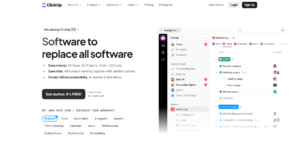
For fractional leaders, the hardest problem is not task management. It is maintaining clarity across multiple organizations that all think they are your top priority.
ClickUp helps solve this by giving you a unified command center for every client.
Instead of bouncing between tools or relying on memory, you can structure each client as its own operating space with clear ownership, priorities, and deliverables.
The real benefit is not organization. It reduces cognitive load. You stop mentally carrying every project at once and instead rely on a system that shows you exactly what matters right now.
This improves decision quality and allows you to show up more strategically in every leadership seat you hold.
2. cal.com: Protect Your Time Like a Leadership Asset
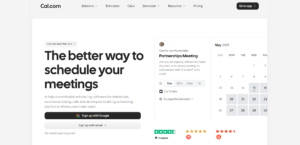
One of the fastest ways fractional leaders lose effectiveness is uncontrolled access to their calendar.
Cal.com gives you full control over when and how stakeholders can book your time.
Instead of reacting to meeting requests across multiple companies, you define your availability once and enforce it automatically.
The real value here is boundary protection. You can reserve uninterrupted time for strategic thinking, board-level work, or deep execution without constant negotiation.
Over time, this changes how clients interact with you. You shift from being constantly available to being intentionally accessible, which increases perceived authority and focus.
3. QuickBooks: Turn Financial Chaos Into Clear Business Intelligence

Most fractional leaders underestimate how much time and energy is lost to financial administration across multiple clients.
QuickBooks simplifies this by centralizing invoicing, expenses, and revenue tracking in one system.
Instead of chasing payments or manually reconciling work across engagements, you get a clear financial picture of your entire fractional practice.
The key benefit is decision clarity. You can immediately see which clients are worth your time, which engagements are inefficient, and where your highest leverage work actually is.
This shifts financial management from reactive admin to strategic input for your business decisions.
4. Sunsama: Stay Focused When Every Client Thinks They Are Priority One
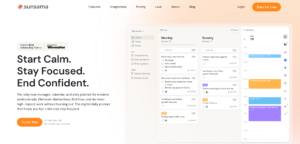
Fractional leaders do not struggle with lack of work. They struggle with too many competing priorities that all feel urgent.
Sunsama helps you translate chaos into a realistic daily execution plan.
Instead of reacting to incoming tasks, you intentionally decide what gets your time each day based on capacity and importance.
This creates a critical advantage. You stop ending your days feeling busy but unclear on impact, and instead finish with visible progress on high-value leadership work.
The benefit is not productivity. It is control over attention, which is the real currency of fractional leadership.
5. Zoho CRM: Build a Pipeline That Works While You Are Focused on Delivery

Fractional leadership is not just execution. It is also continuous relationship management across current and future clients.
Zoho CRM helps you track relationships, conversations, and opportunities without relying on memory or scattered notes.
This becomes especially important when you are working across multiple companies. It is easy for relationships to fade simply due to lack of visibility.
With a structured CRM system, you can maintain consistent touchpoints, track stakeholder history, and ensure you are always building future opportunities while delivering current value.
The result is a more stable pipeline and less pressure to constantly “find the next deal.”
Conclusion: The Goal Is Not More Tools, It Is Less Friction
Fractional leadership fails when everything depends on memory, context switching, and constant availability.
It succeeds when you build systems that reduce friction across execution, time, finance, focus, and relationships.
Together, they create a leadership system that allows you to operate across multiple organizations without fragmentation or burnout.
The real benefit is not productivity. It is sustained high-quality leadership without losing control of your time or energy.
For more tools, workflows, and systems built specifically for fractional leaders, explore the Hey CMO Marketplace.
Want to know more? Connect with us through the Hey CMO or email us at hey@heycmo.com
Join the Hey CMO Fractional Leaders Network
Connect with experienced Fractional Leaders, exchange insights, and build the relationships that help you grow, expand your influence, and thrive in every engagement.

Move faster with our free resources for fractional executives.